
By John Meyer, consultant in financial affairs – Eurasia Business News, August 7, 2026. Article No 3058
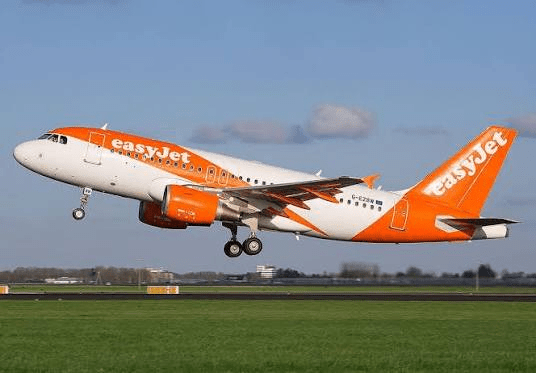
Apollo Global Management has agreed to buy European low-cost airline easyJet in a £5.7 billion, or approximately $7.7 billion, takeover that could reshape competition in the region’s budget-air travel market. The U.S. alternative-asset manager prevailed after rival private-equity bidder Castlelake withdrew, clearing the way for Apollo to take easyJet private if shareholders, courts, aviation regulators and competition authorities approve the transaction.
The proposed acquisition values easyJet shares at £7.15 each, representing a substantial premium to the carrier’s unaffected market price before takeover interest emerged. The deal is expected to close by the end of the first quarter of 2027, subject to required approvals.
Apollo Wins easyJet Bidding Battle
Apollo’s successful approach concludes a short but high-stakes contest for control of one of Europe’s largest low-cost airlines. Castlelake had previously reached an agreement in principle for a lower transaction that valued easyJet at about $7.3 billion. Apollo then submitted its £7.15-a-share cash offer, prompting easyJet’s board to withdraw its support for the rival proposal.
Castlelake formally abandoned its pursuit on August 6, leaving Apollo as the sole bidder. Under the recommended cash deal, easyJet shareholders can accept cash for their shares; eligible shareholders may also choose a “stub equity” option that allows them to retain an indirect, unlisted stake in the airline’s future performance.
Read also : Tax Management strategies for Digital Nomads
For Apollo, the acquisition offers exposure to a leading airline brand with valuable airport slots, a broad European network and a well-established position in leisure travel. The private-equity group said private ownership would provide easyJet with more capital and strategic flexibility to pursue its long-term potential without the quarterly pressure associated with public markets.
What Apollo’s easyJet Deal Means
Apollo has said it does not intend to make material workforce reductions in the first 12 months following completion. It also plans to preserve easyJet’s brand, its UK headquarters, and its existing operating certificates in the UK, Austria and Switzerland.
The investor’s strategy appears focused on building from easyJet’s existing platform rather than immediately restructuring it. Potential priorities include raising revenue from ancillary services, such as baggage, seating and onboard sales; improving seasonal profitability; expanding the loyalty offering; and scaling easyJet Holidays, the group’s package-holiday division.
The takeover also has implications for competition among European budget airlines. easyJet competes directly with Ryanair, Wizz Air, Jet2 and other carriers for leisure passengers and scarce airport capacity. Industry observers expect Apollo’s move to increase interest in other listed low-cost airlines, particularly those with strong balance sheets, constrained airport slots and significant holiday-business potential.
Regulatory Hurdles Remain
The $7.7 billion easyJet acquisition is agreed but not complete. It requires approval by shareholders and the UK courts, as well as aviation licensing, merger-control and foreign-investment clearances.
Read also : The Million-Dollar Retirement Blueprint for U.S. citizens in 2026
A central regulatory challenge concerns European Union airline ownership rules. To retain intra-EU flying rights, easyJet must remain majority owned and effectively controlled by EU nationals. Apollo’s proposed structure is designed to address this limitation: Apollo would own no more than 49.9% of the airline, while EU-based investors, including the Haji-Ioannou family, would hold sufficient ownership to preserve regulatory compliance.
If completed, the transaction would remove easyJet from the London Stock Exchange after more than 25 years as a public company. For passengers, the immediate message is continuity; for investors and rivals, it signals that Europe’s budget-airline sector has become a major private-equity target.
Our community already has nearly 280,000 readers!
Subscribe to our Telegram channel
Follow us on Telegram, Facebook and Twitter
© Copyright 2026 – Eurasia Business News. Article no. 3058

