
By John Evans, consultant in compliance. Eurasia Business News, August 26, 2026. Article n°3126
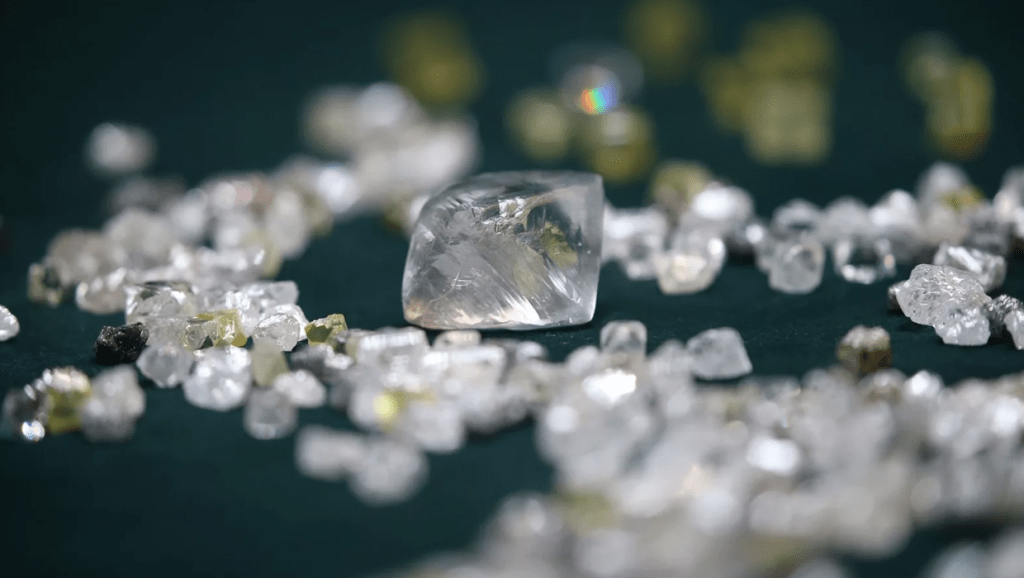
The United States has extended an exemption allowing imports of certain Russian-origin diamonds until September 1, 2027. The authorization, issued by the Treasury Department’s Office of Foreign Assets Control (OFAC), applies only to diamonds that meet strict location and export-date conditions.
The decision provides additional time for traders, jewellers and financial institutions to manage eligible legacy inventories while maintaining the broader U.S. ban on Russian diamonds introduced as part of the G7 sanctions framework.
What OFAC License 104B Allows
Under the updated General License No. 104B, certain diamonds of Russian origin may be imported into the United States if they were physically located outside Russia before the relevant sanctions deadlines and were not subsequently exported or re-exported to Russian territory.
The exemption covers two principal categories:
- Diamonds weighing one carat or more that were located outside Russia before March 1, 2024.
- Diamonds weighing 0.5 carats or more that were located outside Russia before September 1, 2024.
The authorization applies through September 1, 2027, and covers ordinary transactions necessary to bring qualifying diamonds into the United States, including imports into foreign-trade zones.
The extension does not create a general permission to import newly sourced Russian diamonds. Instead, it is designed for existing inventory that had already entered international markets before the applicable restrictions took effect.
U.S. Ban on Russian Diamonds
The United States and other G7 countries announced a phased ban on Russian non-industrial and polished diamonds in December 2023. The policy was intended to reduce revenue for Russia’s diamond industry and limit the ability of sanctioned producers to access Western markets.
From March 1, 2024, the United States prohibited imports of Russian-origin diamonds weighing one carat or more. The restriction was expanded from September 1, 2024, to cover diamonds weighing at least 0.5 carats.
The rules also apply to some diamonds cut or polished in third countries. This provision was introduced to prevent Russian rough diamonds from reaching the U.S. market after processing in major cutting centres such as India.
Before the restrictions, Russian rough diamonds could enter international supply chains even after Alrosa, Russia’s largest diamond producer, was placed on the U.S. Specially Designated Nationals list in 2022. Diamonds were commonly processed and polished in foreign countries, making their original source more difficult to identify.
Compliance Requirements for Diamond Traders
The OFAC extension does not remove the need for detailed documentation. Importers must be able to demonstrate a diamond’s origin, weight, location and export history.
Businesses should maintain records showing that eligible stones were outside Russia before the relevant cutoff date and were not returned to Russian territory afterward. Documentation may include customs declarations, shipping records, invoices, inventory records, certificates and chain-of-custody information.
Companies must also verify that transactions do not involve blocked individuals or entities. The license does not authorize dealings prohibited under other sanctions programs, nor does it permit imports of Russian rough diamonds outside the specific conditions established by OFAC.
Read also: ALROSA launches online jewelry store for Russian diamonds
Because violations can result in civil or criminal penalties, jewellers, banks, insurers and logistics companies may need enhanced due diligence before completing transactions involving Russian-origin diamonds.
Impact on the Global Diamond Market
The one-year extension may help prevent sudden disruption in international diamond trading centres. It gives businesses additional time to sell or transfer qualifying legacy inventory and reduces the risk that previously exported diamonds become stranded because of changing compliance deadlines.
At the same time, the narrow eligibility rules preserve the central objective of the G7 policy: preventing current Russian diamond revenue from reaching Western markets. New Russian-origin stones remain subject to restrictions unless they fall within the precise conditions of General License 104B or another applicable authorization.
The extension reflects a balance between sanctions enforcement and supply-chain stability. It gives legitimate traders greater regulatory certainty while ensuring that the U.S. market remains closed to newly sourced Russian diamonds covered by the ban.
Read also : Gold : Build Your Wealth and Freedom
Through September 2027, strict verification of diamond weight, origin, location and export dates will remain essential for all companies involved in importing Russian-origin diamonds into the United States.
Russia remains the world’s leading producer of rough diamonds by production value and one of the largest by volume. In 2025, Russian mines produced approximately 31.5 million carats of rough diamonds worth about $2.72 billion, according to the latest Kimberley Process data. That represented roughly one-third of global output by volume, although Russian production declined from 37.3 million carats in 2024.
Alrosa Dominates Russian Diamond Mining
Russia’s diamond industry is dominated by Alrosa, a state-controlled company and the world’s largest natural-diamond producer by volume. Alrosa operates primarily in the Sakha Republic, also known as Yakutia, and in the Arkhangelsk region. The company produced approximately 29.8 million carats in 2025, accounting for most of Russia’s total output.
Read also : Tax Management strategies for Digital Nomads
Alrosa has historically supplied around 30% of global rough diamonds, making Russia an important source of stones for jewellery manufacturers, cutting centres and international diamond traders. Its mines produce a wide range of diamonds, from industrial stones to gem-quality rough diamonds.
Production Is Declining
Although Russia remains a dominant producer, output is under pressure. Alrosa’s 2025 production fell by about 10% year over year, and the company expects production of approximately 25 million to 26 million carats in 2026. The decline reflects weaker conditions in the global diamond market, lower prices and efforts to suspend or mothball less-profitable deposits.
Alrosa also suspended mining at the Severalmaz facility in the Arkhangelsk region, a site that has historically contributed around 10% of Russia’s diamond production.
Impact of Western Sanctions
Russia’s diamond industry has faced substantial sanctions since Alrosa was placed on the U.S. Specially Designated Nationals list in 2022. The G7 later introduced a phased ban on Russian non-industrial diamonds and polished stones.
The restrictions expanded in 2024 to cover Russian diamonds processed in third countries, including stones cut and polished in India. The objective is to prevent Russian rough diamonds from entering Western markets after being substantially transformed abroad.
Despite these measures, Russia continues to produce large quantities of rough diamonds and has redirected some sales toward non-Western markets. India, the United Arab Emirates, Armenia and other trading centres remain important to the global diamond supply chain, although compliance checks and traceability requirements have become significantly stricter.
Our community already has nearly 320,000 readers!
Subscribe to our Telegram channel
Follow us on Telegram, Facebook and Twitter
© Copyright 2026 – Eurasia Business News. Article no. 3126

