
By William Collins, consultant in stock markets – Eurasia Business News, September 4, 2026. Article no 3146
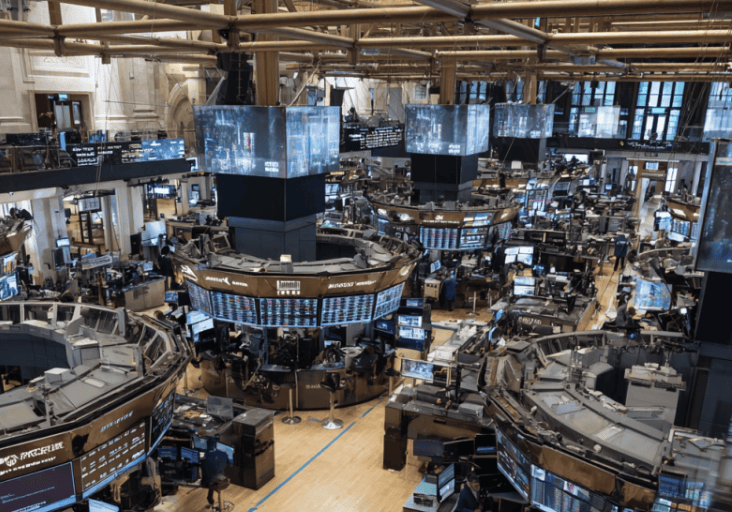
U.S. stocks finished lower on Friday, September 4, after a much stronger-than-expected August employment report revived expectations that the Federal Reserve could raise interest rates at its September meeting. Short-term Treasury yields climbed, gold prices fell and consumer-discretionary shares led the market’s decline as investors reassessed the outlook for inflation and monetary policy.
The Dow Jones Industrial Average declined 0.5%, or 272 points. The S&P 500 fell 0.3%, while the Nasdaq Composite slipped 0.2%. Only three of the 11 S&P 500 sectors ended higher, with industrial companies leading the advance. Consumer discretionary was the weakest sector, reflecting sensitivity to elevated interest rates, borrowing costs and consumer-spending uncertainty.
August Jobs Report Beats Expectations
The U.S. economy added 162,000 nonfarm payroll jobs in August, far above the consensus estimate of 55,000. The result also marked a sharp improvement from July, when payrolls rose by a revised 21,000 jobs. The unemployment rate remained at 4.1%, below the 4.2% rate expected by economists.
The report showed that hiring was stronger than investors expected despite high interest rates, trade tensions and rising energy costs. Education and leisure-and-hospitality industries were among the areas contributing to job growth.
A strong labour market can support household income and consumer spending, which are important for corporate sales and overall economic activity. However, it may also allow the Federal Reserve to remain focused on inflation rather than shifting quickly toward lower interest rates.
Before the payroll report, investors had been uncertain whether the Fed would raise interest rates on September 16. After the stronger data, futures-market pricing increased the estimated probability of a 25-basis-point hike to about 58% to 60%, up from roughly 50% before the release.
Short-Term Treasury Yields Rise
Treasury yields rose after the jobs figures, led by shorter maturities. The 2-year Treasury yield gained approximately 3 basis points to 4.37%, while the 10-year yield rose 1 basis point to 4.78%. The 30-year Treasury yield was broadly steady near 5.24%.
The short end of the Treasury market is especially sensitive to expectations for Federal Reserve policy. The two-year yield initially jumped as high as 4.38% following the report, its highest level since January 2025, before moderating later in the session.
The rise in yields reflects a straightforward market calculation: if the Fed may raise rates, existing bonds with lower coupons become relatively less attractive, causing their prices to fall and yields to rise.
Longer-term yields moved less sharply because investors are balancing near-term inflation risk against concerns that restrictive rates could eventually slow the economy. However, the 10-year Treasury yield remains high enough to influence mortgage rates, business borrowing costs and equity valuations.
Inflation Pressures Remain
The jobs report arrived as energy costs added to inflation concerns. Diesel prices hit a new record of $5.85 per gallon, exceeding the previous high reached in 2022. Higher diesel costs can filter through the economy by raising transportation, logistics, manufacturing and food-distribution expenses.
This creates a challenging backdrop for the Federal Reserve. Strong hiring suggests the economy can withstand restrictive policy, while expensive energy can sustain price pressures. Together, these conditions reduce the urgency for the central bank to cut rates and increase the likelihood of another increase if upcoming inflation data remains strong.
President Donald Trump reacted to the report by calling on the Fed to lower rates. In a social-media post, he argued that the United States had become a stronger credit and urged policymakers to cut borrowing costs. The request highlights growing political attention on the Fed as it prepares for its September decision.
Stocks Fall, KLA Rallies and Lululemon Drops
Equities declined as investors weighed the prospect of higher rates for longer. Growth stocks are especially vulnerable because higher yields reduce the present value investors assign to future profits. Consumer-discretionary businesses also face pressure because households may become more cautious if credit-card, auto-loan and mortgage rates remain high.
KLA Corporation was among the day’s strongest movers, rising 7.4%. The semiconductor-equipment company benefited from demand expectations related to chip manufacturing and advanced technology investment.
Lululemon shares fell 17.3%, making the athletic-apparel retailer one of the market’s sharpest decliners. The move reflected concern around its quarterly results and outlook, adding to broader weakness in consumer-discretionary shares.
Read also : The Million-Dollar Retirement Blueprint for U.S. citizens in 2026
The contrasting stock moves demonstrate how selective the market has become. Investors are still rewarding companies with exposure to strategic technology investment, but they are demanding clearer evidence of resilient sales and margins from consumer companies.
Oil Prices Hold Near $90
Oil prices remained elevated. WTI crude settled at $91.48 per barrel, up 18 cents, or 0.20%, while Brent crude settled at $92.68 per barrel.
High oil prices remain a major risk to the inflation outlook. Crude affects fuel costs, transport expenses, industrial inputs and household budgets. If oil stays above $90 per barrel, it could make it harder for inflation to decline and could strengthen the case for a more cautious or restrictive Federal Reserve stance.
Energy producers may benefit from higher crude prices, while airlines, shipping firms, retailers and manufacturers can face higher operating costs. The gap between the S&P 500 energy sector and consumer-discretionary stocks illustrates this divide.
Gold Price Today
Gold prices declined sharply on September 4 after the strong jobs report lifted Treasury yields and increased expectations for a September Federal Reserve rate hike. The market data shows spot gold at a bid of $4,429.10 and an ask of $4,431.10 per ounce at 5:29 p.m. New York time.
Gold was down $43.10, or 0.96%, on the day, trading within a range of $4,365.80 to $4,491.30.
Read also : Gold : Build Your Wealth and Freedom
Gold tends to face pressure when yields rise because bullion does not generate interest income. A stronger dollar can also reduce demand by making dollar-priced gold more expensive for international buyers. Nevertheless, continued geopolitical tensions, elevated energy prices and fiscal risks may continue supporting safe-haven demand over the longer term.
Market Outlook
Friday’s market reaction confirmed that the Federal Reserve’s September meeting is now a central event for investors. The August employment report removed one major obstacle to a rate hike, but policymakers will still closely examine inflation data before making a decision.
Markets will monitor the next consumer-price reports, wage data, oil prices and Treasury yields. If inflation moderates, the Fed could keep rates unchanged. If price pressures remain persistent, Friday’s robust payroll report provides the central bank with greater room to raise rates again.
Our community already has nearly 320,000 readers!
Subscribe to our Telegram channel
Follow us on Telegram, Facebook and Twitter
© Copyright 2026 – Eurasia Business News. Article no. 3146

