
By William Collins, consultant in stock markets – Eurasia Business News, September 7, 2026. Article no 3148
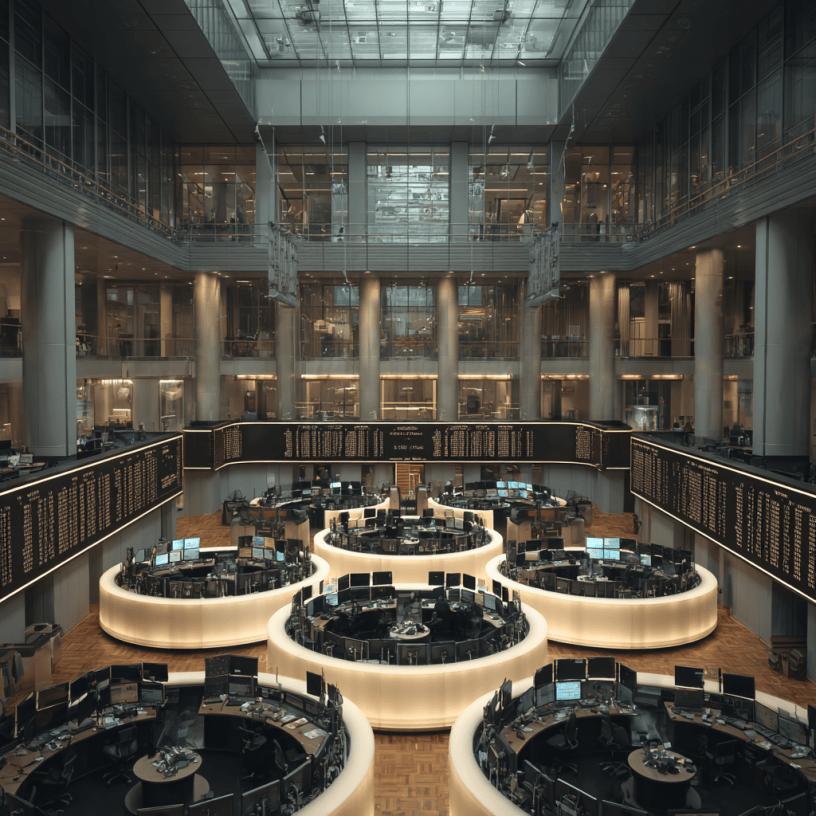
Asian and European stock markets delivered mixed performances on September 7, as renewed tensions between the United States and Iran pushed oil prices higher and increased concerns about inflation. Wall Street remained closed for the U.S. Labor Day holiday, leaving global investors to focus on developments in energy markets, government-bond yields and the outlook for central-bank policy.
The pan-European STOXX 600 ended nearly unchanged at 649.9 points. Gains from stronger-than-expected eurozone economic data were largely offset by rising crude prices, which could make it more difficult for the European Central Bank to bring inflation under control.
Asian Markets Face Oil and Yield Risks
Asian equities began the week cautiously after the latest U.S.-Iran confrontation around the Strait of Hormuz lifted oil prices. The region’s import-dependent economies are particularly vulnerable to higher energy costs because oil and liquefied natural gas are often priced in U.S. dollars.
Japan’s Nikkei 225 closed 0.7% lower, pressured by rising Japanese government bond yields and a stronger yen. The yen rose sharply after Bank of Japan officials suggested further interest-rate increases could be necessary to contain inflation. Higher Japanese yields have challenged exporters and technology companies while also prompting investors to reconsider yen-funded global carry trades.
Chinese mainland markets recovered modestly, with the Shanghai Composite rising 0.3%, while Hong Kong’s Hang Seng Index gained 0.8%. However, investor sentiment remained fragile after Shein’s long-awaited Hong Kong debut disappointed. The fast-fashion company’s shares fell 6.6% in early trading and ended the session down 5.4%, highlighting continued caution toward high-growth consumer and technology listings.
Across the broader Asia-Pacific region, oil prices and the possibility of a prolonged Middle East conflict remained the principal market risks. Brent crude was trading near $96.80 per barrel late in Asian dealings, while West Texas Intermediate crude rose to around $92.14.
European Stocks Finish Flat
European shares opened lower but recovered to finish broadly flat. The STOXX 600 closed at 649.9 points, with energy companies among the strongest performers as crude prices gained. The index had fallen as much as 0.1% early in the session before stronger eurozone data supported sentiment.
Germany’s DAX fell 0.2%, while France’s CAC 40 added 0.1%. Political uncertainty in Germany weighed on sentiment after the far-right Alternative for Germany party performed strongly in Saxony-Anhalt’s state election.
Switzerland’s SMI dropped 0.8%, led lower by Novartis. The pharmaceutical heavyweight fell 3.2% after its experimental cholesterol drug pelacarsen failed to reduce cardiovascular events in a closely watched late-stage study.
The setback was particularly important because it raised questions about the commercial potential of a drug viewed as a potential long-term growth driver for Novartis. Healthcare shares therefore became a notable source of weakness for the Swiss market.
Oil Prices Drive Inflation Concerns
Oil prices continued rising after renewed U.S.-Iran military clashes in and around the Strait of Hormuz. The strategic waterway is a major transit route for global crude oil and liquefied natural gas supplies. Any disruption to tanker traffic, insurance availability or port operations can have immediate effects on energy prices.
Brent crude futures climbed 52 cents, or 0.54%, to $96.80 per barrel, while WTI futures rose 66 cents, or 0.72%, to $92.14. The oil rally reflected fears of supply disruption, not only current physical shortages.
Higher energy prices create risks for the global economy. They increase transport, manufacturing and food costs, reduce household spending power and can force central banks to maintain higher interest rates for longer. For Europe and Asia, which import substantial amounts of energy, the impact can be more severe than for large oil-producing nations.
Gold Prices Slip
Gold prices edged lower on September 7 as investors weighed geopolitical uncertainty against rising expectations that central banks may keep monetary policy tight. Spot gold traded near $4,400 per ounce, pressured by elevated U.S. Treasury yields and a stronger dollar following the August U.S. employment report.
Read also : Gold : Build Your Wealth and Freedom
Gold often benefits from geopolitical stress because investors seek safe-haven assets. Yet higher Treasury yields raise the opportunity cost of holding non-interest-bearing bullion, creating a competing force. The result was a cautious gold market despite renewed tensions around the Strait of Hormuz.
Wall Street Closed for Labor Day
U.S. financial markets were closed on September 7 in observance of Labor Day. There was no trading in the New York Stock Exchange, Nasdaq or U.S. bond markets. Regular trading was scheduled to resume on Tuesday, September 8.
When Wall Street reopens, investors will be focused on oil prices, Treasury yields, Middle East developments and upcoming inflation data. The stronger-than-expected August jobs report increased the probability of another Federal Reserve rate hike, while rising energy prices could add to the central bank’s inflation concerns.
Market Outlook
The September 7 trading session showed that oil remains the dominant driver of global market sentiment. European stocks held steady because stronger eurozone data offset energy-price concerns, while Asian markets remained cautious amid higher yields and currency volatility.
The direction of Brent crude, currently near $97 per barrel, will be crucial for investors in the coming days. A de-escalation in the Strait of Hormuz could reduce the oil risk premium and support stocks. Continued conflict, however, could push crude prices higher, increase inflation fears and renew pressure on global bonds and equities.
Our community already has nearly 320,000 readers!
Subscribe to our Telegram channel
Follow us on Telegram, Facebook and Twitter
© Copyright 2026 – Eurasia Business News. Article no. 3148

