
By Anthony Marcus for Eurasia Business News, May 20, 2026. Article n°3001
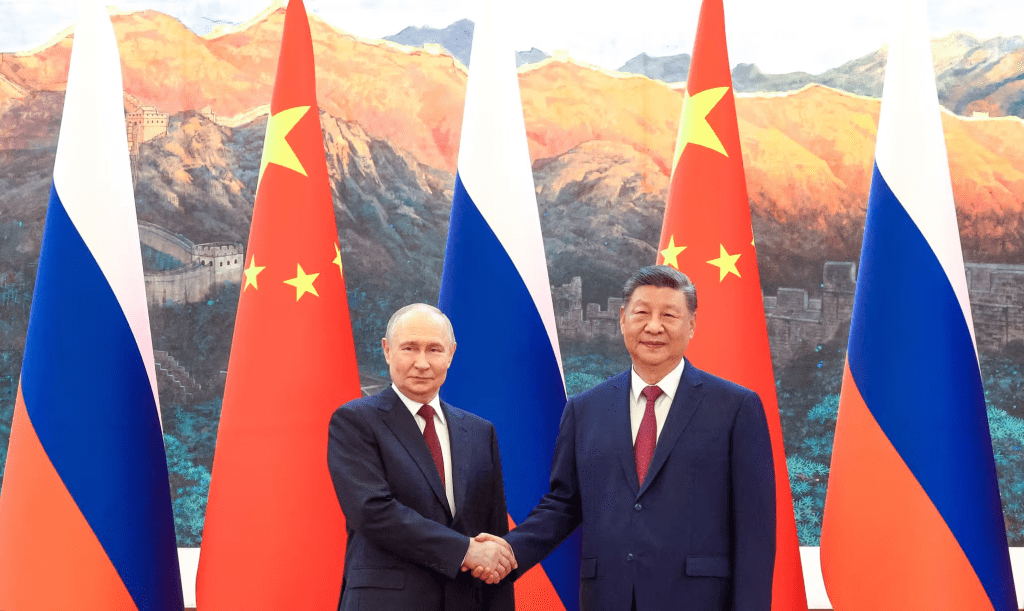
During the official visit of Russian President Vladimir Putin to China, the Russian leader held talks with Chinese President Xi Jinping in Beijing. The parties signed a joint statement on strengthening comprehensive partnership and strategic cooperation and on deepening relations of good-neighborliness, friendship and cooperation. The document is published on the Kremlin website.
Vedomosti has collected the main areas in which Russia and China have agreed to cooperate.
Security, Combating Crime and Terrorism
The document noted the friendship between the armed forces of the countries and the course towards deepening trust in the military field. The parties agreed to jointly respond to threats and challenges, as well as to maintain global and regional security.
Russia and China will jointly fight drug trafficking, arms trafficking, cybercrime, transnational organized crime, corruption and illegal migration.
The parties will continue to counter money laundering and terrorist financing through the exchange of information between financial intelligence units. They agreed to strengthen cooperation in raising awareness among young people about the risks of money laundering and related crimes.
The two countries agreed to jointly respond to emergencies, strengthen cooperation in the field of prevention and elimination of the consequences of natural disasters and assistance to victims.
Trade, transport, space and energy
China and Russia will strengthen contacts and exchanges in the field of trade policy, strengthen cooperation in its key areas, and find new points of growth.
The parties will actively promote cooperation and increase the level of cooperation in the fields of automotive and shipbuilding, as well as the civil aviation industry, the development of information and communication technologies, the chemical industry and metallurgy. The Russian Federation and China are ready to improve the quality and efficiency of investment cooperation, as well as to increase the level of freedom and protection of investments and ensure the safety and stability of production and supply chains.
Moscow and Beijing agreed to continue strengthening relations in the field of energy and support each other in the oil and gas, coal, peaceful use of nuclear energy and renewable energy. The parties will continue the construction projects of the Tianwan Nuclear Power Plant and the Xudapu Nuclear Power Plant.
The Russian Federation and the PRC will continue cooperation in the financial sphere, and will also deepen cooperation in the field of customs duties and taxation. The parties intend to cooperate in this area to achieve sustainable economic growth and effectively respond to global economic challenges. They also stressed the importance of strengthening cooperation in the field of antitrust policy between Russia and China.
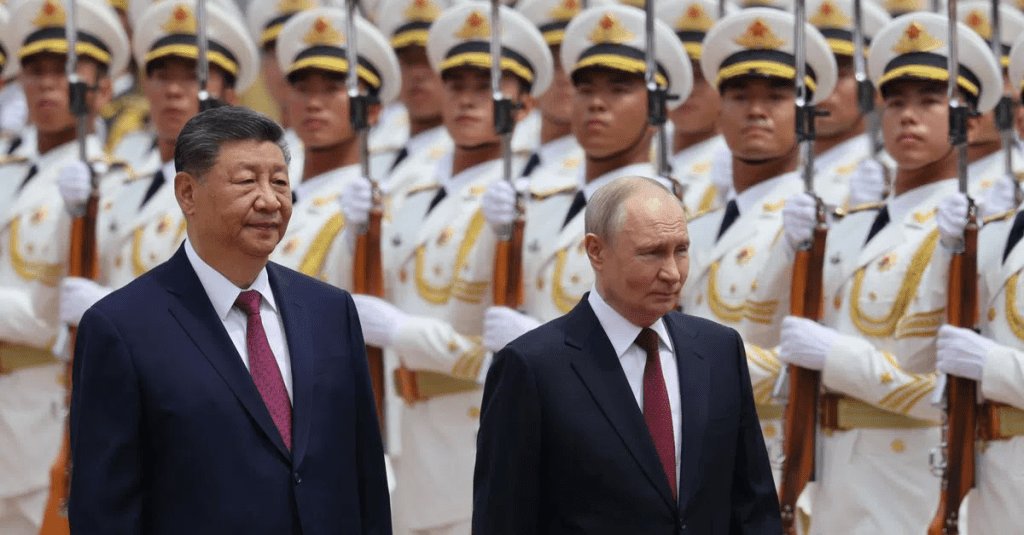
The parties will continue to develop air traffic. The countries intend to increase the construction of Russian-Chinese cross-border transport infrastructure and exchange experience in the field of regulatory regulation of unmanned technologies.
The states will increase the volume of export-import cargo transportation by rail. The countries will deepen cooperation in the construction of road bridges and the development of transport corridors.
Russia and China will deepen cooperation in the field of satellite navigation and space projects, including the International Scientific Lunar Station, the exploration of the Moon and deep space.
Agriculture and construction
Both countries also mentioned the agricultural and forestry sectors in the deal. Deepening cooperation in the agricultural sector contributes to strengthening the food security of the states. The document mentions the protection of the population of red-listed animals, such as the Far Eastern leopard or giant panda. Moscow and Beijing agreed to continue cooperation in the field of environmental protection and water resources.
Russia and China have pledged to deepen bilateral cooperation in housing development, urban and rural infrastructure construction, and sustainable territorial planning, further strengthening their strategic partnership in the field of civil development and modernization.
Cooperation in the humanitarian sphere
The two countries stood for cultural and civilizational diversity, as well as support for each other’s cultural and historical identity and spiritual and moral values. They believe that the role of UNESCO should be strengthened.
The document states that the parties emphasize the importance of preserving military memorial sites located on each other’s territories, which perpetuate the memory of those who died during World War II. Russia and China will work together to take care of such facilities, establish the fate of the dead and missing, and perpetuate their memory.
Russia and China believe that humanitarian cooperation is the basis of society. They highly appreciated the results of cooperation in the field of education, performing arts, museum and library work, television and radio broadcasting, cinematography, sports and decided to continue partnerships. The parties will make efforts to successfully hold the Years of Russian-Chinese Cooperation in the field of education. Deepening scientific, technical and innovative cooperation is also necessary for the competitiveness of the two countries, the document says.
Cooperation also implies interaction in the field of healthcare. The parties will continue to consistently develop cooperation in areas related to health care, such as disaster medicine, biological safety, and prevention of infectious diseases.
Read also : The Private Investor Deal Evaluation Handbook
The extension of the visa-free regime between Russia and China is also mentioned. The parties will continue to organize international events and promote projects in the field of youth policy and the media. They noted exchanges between online media and well-known bloggers of the two countries. In addition, the parties will be more active in exchanging experiences and sharing practices in the protection and enforcement of copyright.
Russia and China are founding members of the BRICS. This group is now a 10-member bloc including Brazil, Russia, India, China, South Africa, Egypt, Ethiopia, Iran, the UAE, and Indonesia. The group is still centered on coordination among major emerging economies, but it has also become a forum for broader geopolitical signaling, especially on multipolarity and alternatives to Western-led institutions.
Our community already has nearly 245,000 readers!
Subscribe to our Telegram channel
Follow us on Telegram, Facebook and Twitter
© Copyright 2026 – Eurasia Business News. Article no. 3001

