
By John Meyer, consultant in business – Eurasia Business News, August 14, 2026 – Article no. 3086
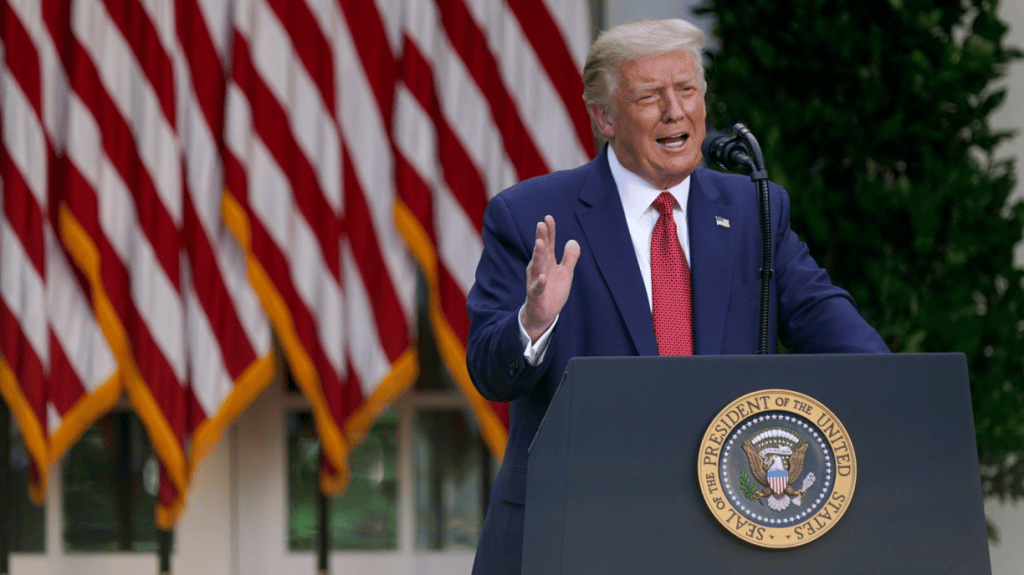
President Donald Trump has announced new US tariffs on imported drones and drone components, imposing duties of up to 100% on certain systems considered sensitive for national security. The measure is designed to reduce US reliance on foreign drone supply chains, strengthen domestic production and address concerns about China’s dominance in the unmanned aircraft industry.reuters+1
The tariffs are tiered according to drone size, operational capability and country of origin. Most duties are scheduled to take effect 21 days after the presidential proclamation, while selected non-sensitive components will face delayed implementation.
This move comes after Trump unveiled nex tariffs, affecting 99% of US imports in late July.
100% Tariff on Sensitive Drones
The highest 100% ad valorem tariff will apply to larger drones and systems with capabilities considered sensitive for national security. This includes unmanned aircraft weighing more than 25 kilograms and drones equipped with thermal-imaging technology. Certain critical components and drone docking stations are also subject to the maximum rate.
Thermal imaging has military, surveillance and intelligence applications, making it a particular focus of the policy. The tariff is intended to discourage dependence on imported systems that could create security, data-protection or supply-chain vulnerabilities.
Smaller drones and components without equivalent national-security implications will face a lower 25% duty. The distinction reflects the administration’s attempt to target strategically important hardware while applying a less severe levy to consumer, commercial and lower-capability systems.
Preferential Rates for US Allies
The Trump administration has created lower tariff rates for selected allied economies. Drones and components imported from the European Union, Japan, Liechtenstein, South Korea, Switzerland and Taiwan will face a 15% tariff. Imports from the United Kingdom will receive a 10% duty.
These preferential rates are conditional. To qualify, substantially all hardware, software and technology used in the drone must originate in the relevant partner country or the United States. The requirement is designed to prevent Chinese-made components from entering the US market through assembly or re-export in allied nations.
The origin rules may become a central issue for drone manufacturers. Modern drones rely on globally sourced semiconductors, sensors, cameras, batteries, radio-frequency systems, flight-control software and communications equipment. Firms seeking lower tariffs will need to demonstrate detailed supply-chain compliance.
Countering China’s Drone Dominance
The new drone tariffs are part of a broader US effort to reduce reliance on China for strategically important technologies. Chinese firms have long dominated the commercial-drone market, particularly in consumer drones, aerial imaging, industrial inspection and low-cost unmanned systems.
US officials argue that foreign-built drones can pose risks related to data collection, surveillance, software access and supply-chain disruption. The tariff policy is therefore framed as both an industrial strategy and a national-security measure.
By making imported drones more expensive, the administration aims to create stronger incentives for US companies to manufacture drones and critical components domestically. The policy could also encourage greater investment in US-made batteries, sensors, navigation systems, secure communications and autonomous-flight software.
Implementation Timeline and Market Impact
The main tariff schedule is set to begin at 12:01 a.m. Eastern Time on September 3, 2026. Duties on certain less-sensitive components will be delayed until February 9, 2027, giving companies additional time to adjust sourcing and production plans.finance.
The tariffs could benefit domestic drone producers by reducing price competition from imported products. However, they may also raise costs for US businesses that use drones in agriculture, construction, energy, logistics, public safety, mapping and infrastructure inspection.
For defense companies, the measure could accelerate the development of a more secure domestic supply base. For commercial drone users, the immediate effect may be higher equipment prices and supply-chain adjustments.
The policy marks a significant escalation in US drone trade restrictions. Its long-term success will depend on whether US and allied manufacturers can rapidly scale production while maintaining competitive prices, advanced technology and reliable access to critical components.
Our community already has nearly 300,000 readers!
Subscribe to our Telegram channel
Follow us on Telegram, Facebook and Twitter
© Copyright 2026 – Eurasia Business News. Article no. 3086

