
By Alexander Miller, consultant in energy markets. – Eurasia Business News, September 16, 2026. Article no 3165
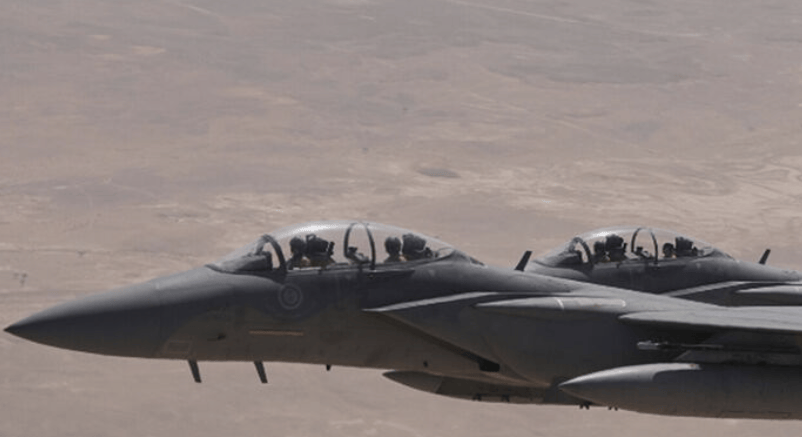
Yemen’s Iran-backed Houthi rebels said they shot down a Saudi Arabian F-15 fighter jet over the central Marib governorate, a claim that—if confirmed—would mark a significant escalation in renewed hostilities between Riyadh and the rebel movement. Saudi authorities had not confirmed the reported aircraft loss, and independent verification of the Houthi account was not immediately available.
Houthi military spokesman Yahya Saree said the group targeted the Royal Saudi Air Force jet while it was conducting what he described as “hostile operations” in support of Saudi military mobilization in Yemen. He said the aircraft was struck by a locally manufactured missile, though accounts differed over whether the weapon was described as an air-to-air or surface-to-air system.
Houthi F-15 Claim Raises Stakes
According to the Houthis, the Saudi F-15 was brought down in the skies above Marib, a strategically important and long-contested area in central Yemen. Saree also claimed that Houthi air defenses confronted additional Saudi F-15 and Eurofighter Typhoon formations that entered the area in search of the purported wreckage, forcing them to retreat.
The group released footage it said showed the aftermath of the incident, but neither Saudi Arabia nor independent authorities had authenticated the material or confirmed the fate of the aircraft’s crew. Reporting from multiple outlets continued to characterize the claimed shootdown as unverified.
The alleged loss comes after the Houthis accused Saudi Arabia of conducting hundreds of airstrikes in Yemen. Saree said Saudi forces had carried out 450 strikes, a figure that also could not be independently confirmed.
Saudi Arabia Faces Houthi Pressure
The claimed F-15 shootdown underscores the mounting pressure on Saudi Arabia as the conflict with Yemen’s Houthi movement intensifies. The rebels have paired military operations in Yemen with threats and attacks aimed at Saudi oil facilities, military sites and energy-export infrastructure.
The Houthis have said their operations are directed at Saudi military bases and oil installations, not religious sites. That statement followed Saudi accusations that the group had launched a drone toward the area near Mecca, Islam’s holiest city—an allegation the Houthis denied.
Riyadh has called the alleged attempted attack near Mecca a “red line,” heightening fears that the confrontation could broaden further.
Oil Market Risks Grow
The escalation carries implications beyond the battlefield. Saudi Arabia remains a major oil producer and exporter, and attacks or credible threats against its petroleum infrastructure can quickly increase risk premiums in global crude markets.
Houthi operations threaten oil shipments and could disrupt regional transport routes, particularly if the conflict spreads toward critical maritime corridors. The group’s ability to claim a strike on a sophisticated Saudi fighter jet also reinforces concerns over the growing range of Houthi missile and air-defense capabilities.
For markets and regional policymakers, Saudi-Houthi tensions will remain a key risk factor as diplomatic efforts face renewed strain and energy-security concerns intensify.
Our community already has nearly 330,000 readers!
Subscribe to our Telegram channel
Follow us on Telegram, Facebook and Twitter
© Copyright 2026 – Eurasia Business News. Article no. 3165
 Eurasia Business News