
By John Meyer, consultant in business – Eurasia Business News, September 16, 2026. Article no. 3166
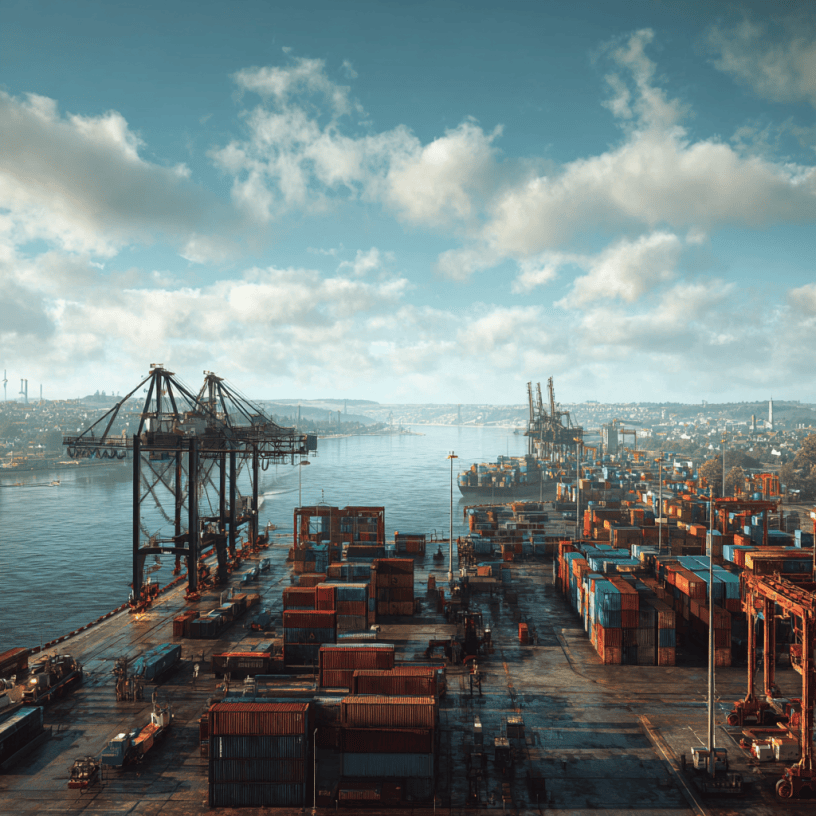
The European Union’s trade deficit with China has reached approximately €1 billion per day, European Commission President Ursula von der Leyen warned in her 2026 State of the European Union address. Calling the imbalance “unsustainable,” she said Europe is already experiencing a second “China shock” that is putting factories, jobs and industrial competitiveness under pressure.
Von der Leyen’s remarks signal a tougher EU trade stance toward Beijing as Brussels attempts to reduce dependency on Chinese manufacturing and critical minerals. The challenge, however, is structural: Europe needs Chinese inputs and consumer products, while China relies on the EU as a major export destination at a time of softer domestic demand.
Europe’s €360 Billion China Trade Gap
The scale of the EU-China trade imbalance has become central to the debate. In 2025, the EU imported €559.4 billion of goods from China while exporting €199.6 billion, generating a goods trade deficit of €359.8 billion. That is equivalent to nearly €1 billion every day.
| EU-China goods trade, 2025 | Value |
|---|---|
| EU imports from China | €559.4 billion |
| EU exports to China | €199.6 billion |
| EU goods trade deficit | €359.8 billion |
| Average deficit per day | About €1 billion |
In her speech to the European Parliament in Strasbourg, von der Leyen said the deficit had reached a “tipping point.” She warned that the impact was increasingly visible “in our communities and factories across our Union,” linking Chinese industrial competition to deindustrialization in Europe’s traditional manufacturing regions.audiovisual.
“Some say the second China shock is looming, but it’s already here,” von der Leyen said. The phrase refers to fears that a new wave of low-cost Chinese manufactured exports could weaken European producers much as the first major period of Chinese export expansion disrupted industries in advanced economies in the early 2000s.
Why China’s Exports Pressure Europe
The concern is not limited to the size of Europe’s trade deficit. The composition of Chinese exports has changed dramatically. China is no longer mainly supplying low-cost consumer goods; it is increasingly competitive in sectors Europe sees as strategically important for its future industrial base.
Key areas of concern include:
- Telecommunications equipment and consumer electronics.
- Electrical machinery and industrial equipment.
- Industrial robots and advanced manufacturing systems.
- Solar panels, batteries and electric vehicles.
- Chemicals and other energy-intensive industrial products.
- Semiconductors, data-center inputs and related technology supply chains.
These industries overlap with sectors in which Germany, France, Italy and other EU members have traditionally sought technological leadership. China’s scale, growing manufacturing efficiency and intense domestic competition have allowed many Chinese companies to offer advanced products at lower prices.
For Europe, the risk is not only declining market share. It is the potential loss of technological know-how, supplier networks, skilled industrial jobs and investment in strategic production capacity.
Energy Costs and Competitiveness
Europe’s industrial challenge cannot be explained solely by Chinese exports. High energy prices, a heavy tax burden, regulatory complexity and weaker investment have reduced the competitiveness of many European manufacturers.
Energy-intensive businesses—including chemicals, metals, glass, fertilizers and industrial materials—have been particularly vulnerable. When domestic production costs rise while cheaper Chinese imports increase, companies face growing pressure to cut output, shift investment overseas or close facilities.
At the same time, China has expanded capacity in advanced manufacturing, clean energy and high-tech equipment. This has been supported by large-scale investment, sophisticated supply chains and an industrial policy aimed at strengthening domestic technology capabilities.
Read also : Gold : Build Your Wealth and Freedom
The result is a growing mismatch: European companies face relatively high operating costs, while Chinese firms have increased their ability to compete globally on price, scale and, increasingly, technology.
China’s Weak Domestic Demand
China also has strong incentives to preserve access to the European market. Its domestic property-market downturn, cautious household spending and slower consumption growth have made it harder to absorb the country’s enormous manufacturing output internally.
That weakness in domestic demand creates additional pressure for Chinese producers to export. As companies seek overseas buyers for vehicles, solar equipment, machinery and electronics, Europe becomes an especially attractive market because of its large consumer base and open trading system.
Read also : Tax Management strategies for Digital Nomads
Von der Leyen emphasized that China therefore has a stake in finding a solution. “China’s weaker domestic demand means it also needs our European market,” she said, arguing that rebalancing trade would serve both sides’ interests.audiovisual.
EU Trade Response Takes Shape
The European Commission has indicated that it is prepared to use “all tools” available if negotiations with Beijing fail to produce results. Possible measures include anti-subsidy investigations, anti-dumping duties, import restrictions, public-procurement rules, investment screening and stronger supply-chain requirements.reuters+1
Brussels is also working to lower strategic dependence on China for rare earth elements and other critical raw materials used in batteries, wind turbines, electric vehicles, semiconductors and defense equipment. Von der Leyen’s agenda includes a proposed European Critical Raw Materials Corporation designed to coordinate purchasing, stockpiling and supply diversification.
Yet a full-scale protectionist confrontation would carry costs for both economies. European manufacturers still rely on Chinese components, materials and machinery, while Chinese firms depend on European customers. The EU’s challenge is therefore to reduce vulnerabilities and restore competitiveness without triggering a trade conflict that disrupts already interconnected supply chains.
Von der Leyen’s message was clear: Europe does not intend to decouple from China, but it no longer considers the current relationship economically sustainable.
Our community already has nearly 330,000 readers!
Subscribe to our Telegram channel
Follow us on Telegram, Facebook and Twitter
© Copyright 2026 – Eurasia Business News. Article no. 3166

