
By William Collins, consultant in stock markets – Eurasia Business News, September 16, 2026. Article no 3163
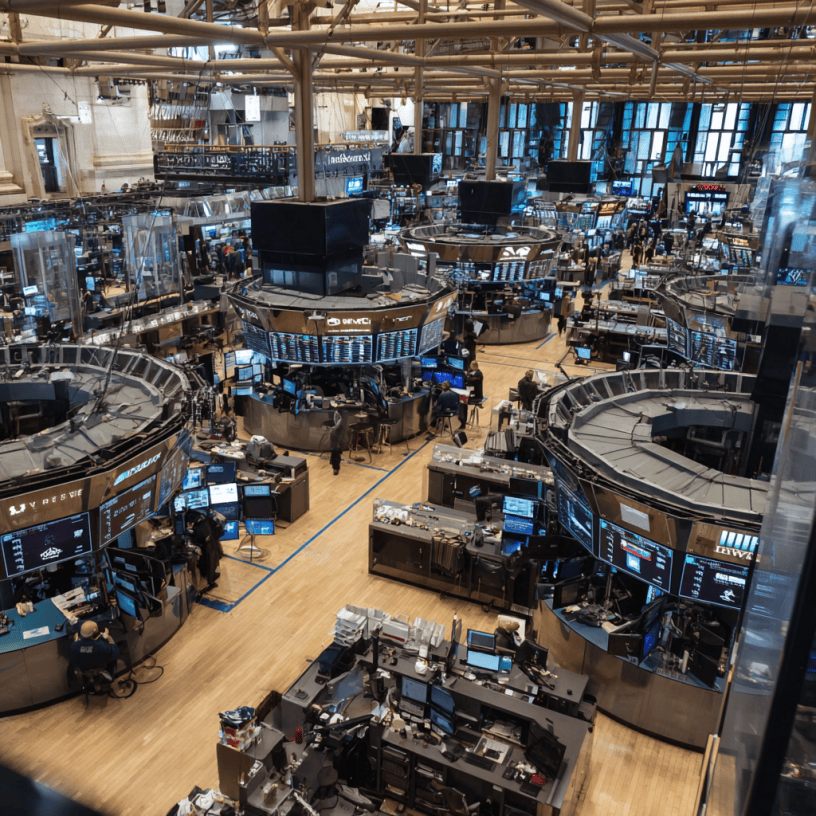
U.S. stocks moved modestly higher on Wednesday, September 16, after the Federal Reserve raised its benchmark interest rate by 25 basis points to a target range of 3.75% to 4.00%. The decision was the Fed’s first rate increase since 2023, but markets largely absorbed the move as investors welcomed signs that policymakers remain committed to containing inflation.
The S&P 500 rose about 0.3% to 0.4% following the 2 p.m. ET announcement, while the Nasdaq Composite gained roughly 0.7% to 0.8%. The Dow Jones Industrial Average was close to flat, reflecting a more mixed response among economically sensitive blue-chip stocks.
Fed Raises Rates by 0.25%
The Federal Open Market Committee increased the federal-funds target range from 3.50%–3.75% to 3.75%–4.00%, as widely expected. The decision was unanimous, with all 12 voting members backing the quarter-point increase.
The adjustment is intended to moderate demand in order to curb inflation, which has exceeded its 2% target for more than five years. All 12 voting members approved the rate hike. The decision to raise the target range for the federal funds rate confirms the FOMC’s commitment to “ensuring price stability.”
The move is significant because it marks the first Federal Reserve rate hike in more than three years. Policymakers have faced renewed pressure to tighten monetary policy after inflation indicators remained firm and higher oil prices threatened to add further fuel to consumer-price growth.
Recent data have pointed to persistent price pressures. August retail sales rebounded more strongly than economists expected, while import prices increased by more than forecast and export prices unexpectedly rose. Together, the reports suggest consumer demand and inflation may remain resilient enough to justify additional caution from the Fed.
Market participants will now focus on the updated “dot plot,” the Fed’s economic projections and Chair Kevin Warsh’s post-meeting comments. Investors want to know whether the central bank sees Wednesday’s rate hike as a one-time move or as the beginning of another tightening phase.
Stocks Rise as Rate Move Is Absorbed
Wall Street’s relatively calm response suggested that the interest-rate increase had already been substantially priced into markets. The Nasdaq outperformed, aided by a rebound in technology shares after recent volatility driven by artificial-intelligence safety concerns and rising Treasury yields.
| Market indicator | September 16 performance |
|---|---|
| Dow Jones Industrial Average | Up about 0.1%; broadly flat |
| S&P 500 | Up about 0.3%–0.4% |
| Nasdaq Composite | Up about 0.7%–0.8% |
| 10-year Treasury yield | Down about 5 basis points to 4.95% |
| Brent crude | Down about 2.9% to $105.56 a barrel |
| WTI crude | Settled down 3.2% at $102.43 a barrel |
Eight of the S&P 500’s 11 main sectors traded higher. Information technology led the advance, while energy shares were the weakest sector as oil prices pulled back from recent multi-month highs.
Dell Technologies rose 3.7%, benefiting from the relative strength in technology shares. J.B. Hunt Transport Services, however, fell 12.4%, illustrating concerns that high fuel costs and uncertain economic conditions could weigh on transport companies.
Treasury Yields Retreat from Highs
Treasury yields declined after recently testing multi-year highs. The two-year yield slipped about one basis point to 4.65%, while the 10-year yield fell five basis points to 4.95%. The 30-year yield also declined five basis points to 5.31%.
The retreat in yields offered support to technology and growth stocks. When long-dated Treasury yields rise, investors tend to reassess the valuation of companies whose earnings are expected further in the future. A move back below 5% on the 10-year yield therefore eased some of the pressure that had recently hit the Nasdaq and semiconductor sector.
Alex Guiliano, managing director at Resonate Wealth Partners, said the Fed’s hike signaled that the central bank is prepared to act on inflation rather than merely discuss the risk. He added that, while a single 25-basis-point increase is unlikely to lower inflation immediately, it could help stabilize the bond market and influence borrowing costs across the economy.
Oil Prices Fall but Stay Elevated
Oil prices fell sharply after their recent rally, though they remained well above levels seen earlier in the summer. October West Texas Intermediate crude settled down $3.40, or 3.2%, at $102.43 a barrel. November Brent crude fell $3.19, or 2.9%, to $105.56 a barrel.
The pullback came after Brent and WTI had surged above $108 and $105, respectively, amid concern over Middle East supply disruptions. Saudi Arabia’s East-West pipeline shutdown, threats to shipping routes near the Strait of Hormuz and Houthi control over parts of the Red Sea trade corridor have kept a sizable geopolitical risk premium embedded in crude markets.
Read also : Tax Management strategies for Digital Nomads
Lower oil prices eased the immediate inflation concern, helping stocks advance after the Fed announcement. However, Brent above $100 still represents a significant challenge for consumers, transport companies and energy-importing economies.
Gold Price on September 16, 2026
Gold turned lower after the Fed’s decision, as the stronger U.S. dollar and the prospect of tighter monetary policy outweighed safe-haven demand. The live gold-price data supplied for September 16 showed spot gold trading near $4,285.50 per ounce at 2:39 p.m. EDT, down $6.80, or 0.16%, on the day.
Spot gold earlier climbed above $4,346 per ounce before the policy announcement, supported by a softer dollar and declining oil prices. It then sold off sharply after the Fed raised rates, falling from an intraday high near $4,366 to approximately $4,286.
| Gold market metric | September 16 level |
|---|---|
| Spot-gold bid, 2:39 p.m. EDT | $4,285.50 per ounce |
| Spot-gold ask | $4,287.50 per ounce |
| Intraday high | $4,366.30 per ounce |
| Intraday low | $4,264.10 per ounce |
| Price per gram | $137.78 |
Gold remains vulnerable to additional upside in U.S. yields and the dollar. Still, ongoing geopolitical risks and uncertainty around global oil supplies could support the metal if volatility returns to equities or energy markets.
The Fed’s decision has shifted attention to the path of future rate hikes. With inflation still above target and oil prices elevated, markets will closely watch whether policymakers signal another increase before year-end.
Our community already has nearly 330,000 readers!
Subscribe to our Telegram channel
Follow us on Telegram, Facebook and Twitter
© Copyright 2026 – Eurasia Business News. Article no. 3163

