
By William Collins, consultant in stock markets – Eurasia Business News, September 16, 2026. Article no 3162
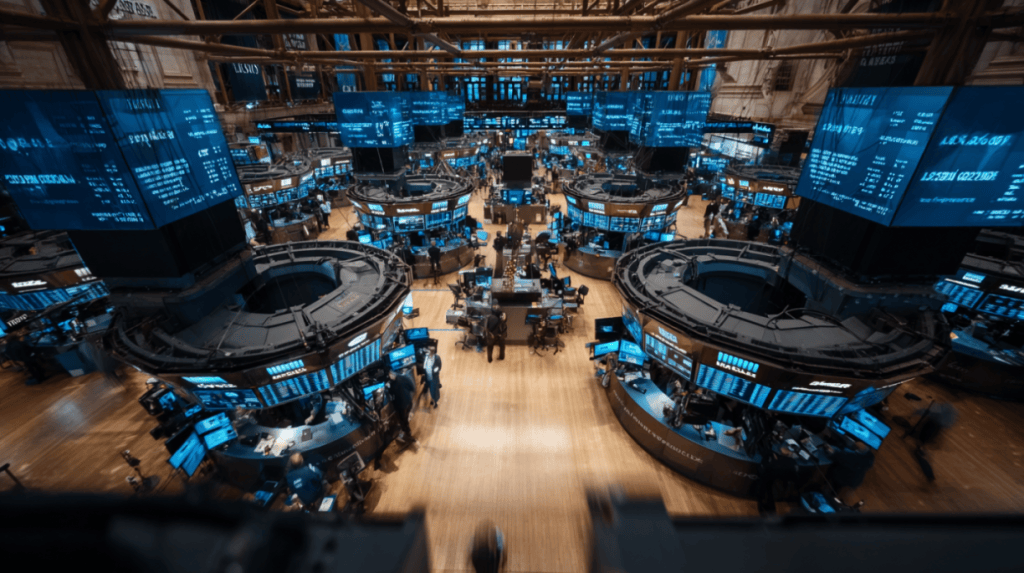
Financial markets were relatively calm on Wednesday, September 16, 2026, as investors awaited the Federal Reserve’s closely watched policy decision. U.S. stock futures edged higher, the 10-year Treasury yield hovered near the key 5% threshold and Brent crude remained above $107 a barrel as the Middle East conflict continued to threaten global energy supplies.
The Federal Open Market Committee is widely expected to raise its benchmark interest-rate target by 25 basis points, lifting the federal-funds range to 3.75%–4.00% from 3.50%–3.75%. If delivered, the move would be the Fed’s first rate increase since 2023 and a major response to persistent inflation pressures reinforced by the recent oil-price shock.
The decision is scheduled for 2 p.m. ET, followed by a press conference by Fed Chair Kevin Warsh at 2:30 p.m. ET. While the rate increase is largely expected, investors will focus on the Fed’s updated economic forecasts, policy projections and comments about whether further tightening remains likely later this year.
Stock Futures Edge Higher Before Fed
U.S. equity futures rose modestly in premarket trading as investors positioned for the Fed announcement. Dow futures added about 0.2%, S&P 500 futures gained 0.3% and Nasdaq futures rose 0.6%.
The early rebound followed a difficult recent stretch for Wall Street. The main U.S. indexes had fallen in six of the previous seven sessions as rising bond yields, high oil prices and concerns over artificial-intelligence spending pressured risk appetite.
Read also : Tax Management strategies for Digital Nomads
Among the strongest S&P 500 premarket gainers were FactSet Research Systems, up 5.86%; Genuine Parts, up 3.22%; PNC Financial Services, up 2.15%; KKR, up 2.00%; and International Paper, up 1.74%.
The largest early losers included J.B. Hunt Transport Services, down 9.09%; Garmin, down 2.96%; Revvity, down 2.27%; Nucor, down 1.86%; and DexCom, down 1.71%.
Investors were also digesting stronger U.S. economic data. Retail sales rebounded in August and exceeded consensus forecasts, while import prices rose more than expected and export prices unexpectedly increased. The reports reinforce the narrative that demand and inflation remain firm enough for the Fed to justify another rate rise.
Treasury Yield Near 5%
The 10-year Treasury yield traded around 5.0% after briefly moving above that closely watched level in recent sessions. The benchmark yield rose to 5.01% in early trading, while the 2-year yield stood near 4.67% and the 30-year yield traded around 5.38%.
High Treasury yields matter for the economy because they affect mortgage rates, auto loans, corporate borrowing and equity valuations. A yield near 5% implies that financial conditions remain restrictive even before any additional Fed action.
The yield curve also reflects an unusual market dynamic. The 2-year yield, which is more directly tied to near-term Fed policy expectations, remains below the 10-year rate. The upward-sloping curve suggests investors see persistent inflation, heavy Treasury issuance and elevated long-term borrowing needs as risks that could keep yields high.
Oil Prices Remain Elevated
Oil prices stayed near multi-month highs, maintaining pressure on inflation expectations. Brent crude traded around $107–$108 per barrel, while West Texas Intermediate crude climbed above $105.
WTI surged 4.38% to settle at $105.83 per barrel, while Brent rose 2.90% to settle at $108.75, according to Tuesday settlement data. The gains reflected an ongoing geopolitical risk premium amid disruptions to regional energy routes and heightened concern about supplies.
The Middle East situation remains central to the market outlook. Saudi Arabia’s East-West pipeline, a major alternative route for exporting oil without using the Strait of Hormuz, was damaged and temporarily shut after drone attacks. Meanwhile, Iran-aligned Houthi forces have taken effective control of the Bab el-Mandeb chokepoint connecting the Red Sea and Gulf of Aden.
Iranian Foreign Minister Abbas Araghchi met Chinese Foreign Minister Wang Yi in Beijing on Wednesday. China called for restraint, a return to diplomatic negotiations and measures to reopen the Strait of Hormuz to safeguard global energy transportation and supply chains.
Gold Price Today: September 16
Gold prices were volatile ahead of the Fed decision. Spot gold traded near $4,288.48 per ounce in early Asian trading, down 0.1%, while December gold futures were near $4,328.10.
However, the live market data supplied for September 16 showed gold recovering strongly during the New York morning. Spot gold was quoted at a bid of $4,355.70 per ounce at 9:13 a.m. ET, up $62.90, or 1.47%, on the day. The intraday range was approximately $4,274.80 to $4,358.00 per ounce.
Read also : Gold : Build Your Wealth and Freedom
| Gold measure | September 16 level |
|---|---|
| Spot-gold bid, 9:13 a.m. ET | $4,355.70 per ounce |
| Spot-gold ask, 9:13 a.m. ET | $4,357.70 per ounce |
| Intraday low | $4,274.80 per ounce |
| Intraday high | $4,358.00 per ounce |
| Approximate price per gram | $140.04 |
Gold typically faces pressure when yields and rate-hike expectations rise because bullion does not generate interest. Yet the metal can draw safe-haven demand during geopolitical uncertainty, especially when risks surround energy supply routes and equity-market volatility.
What the Fed Must Signal
The central issue is no longer simply whether the Fed raises rates. Futures markets indicate a roughly 90%–95% probability of a quarter-point hike, leaving limited room for surprise in the headline decision.cnbc+1
Instead, investors will look for answers to three questions:
- Will the Fed signal another rate hike before year-end?
- Does the central bank see oil-driven inflation as temporary or persistent?
- Is Chair Warsh concerned that higher Treasury yields are already tightening financial conditions enough to slow the economy?
A hawkish answer could push the dollar and Treasury yields higher, putting pressure on technology stocks and gold. A more measured tone could trigger a relief rally in bonds and equities. With oil still above $100 and geopolitical risks unresolved, the Fed’s guidance may matter as much as the rate decision itself.
Our community already has nearly 330,000 readers!
Subscribe to our Telegram channel
Follow us on Telegram, Facebook and Twitter
© Copyright 2026 – Eurasia Business News. Article no. 3162

