
By John Meyer, consultant in business and foreign investment – Eurasia Business News, September 16, 2026. Article no 3168
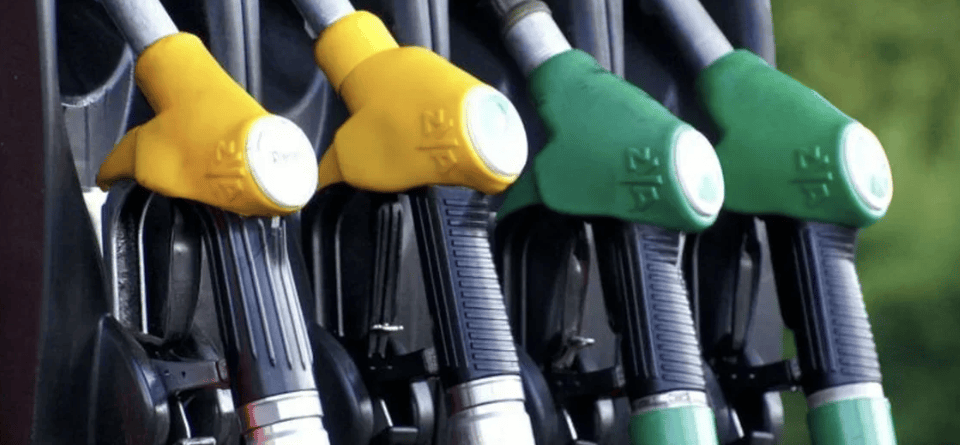
European governments are reviving fuel-price support measures as higher crude oil costs push diesel and petrol prices sharply higher, threatening household budgets, business margins and political stability. From direct subsidies and lower taxes to proposed windfall levies on oil-company profits, policymakers are seeking to protect consumers without placing excessive strain on public finances.
The rapid increase in fuel prices follows the Middle East conflict, which has disrupted energy infrastructure and shipping routes. Attacks on Saudi Arabia’s East-West oil pipeline, a key alternative route around the Strait of Hormuz, have added to supply concerns. European countries, which rely heavily on imported oil and refined products, face particular exposure to sustained high crude prices.
France Extends Targeted Fuel Aid
France has chosen targeted assistance rather than an economy-wide reduction in fuel taxes. Prime Minister Sébastien Lecornu asked ministers to extend support for sectors most exposed to higher energy costs until December 31, aiming to preserve economic activity, employment and investment visibility through year-end.
The government has increased fuel support for commercial fishermen from 25 cents to 35 cents per litre. The move followed protests and blockades at southern French ports and oil depots, as fishermen warned that soaring diesel costs were making operations uneconomic.
Other sectors will also receive continued support:
| French fuel-support measure | Assistance |
|---|---|
| Commercial fishermen | 35 cents per litre |
| Construction and public-works firms | 20 cents per litre of non-road diesel |
| Farmers | 15 cents per litre |
| Duration | Extended through December 31 |
The diesel subsidy for construction and public-works companies has been extended and broadened to include businesses with fewer than 50 employees. Farmers will continue to receive 15 cents per litre, in addition to other agricultural emergency support measures.
Diesel prices in France moved close to record levels on September 17, reaching about €2.37 per litre—just below the estimated record of €2.38 per litre. The price shock has intensified public concern over purchasing power and raised the risk of wider protests.
Spain, Hungary and Poland Take Different Paths
European governments are deploying different tools based on their domestic energy markets, fiscal capacity and political priorities.
Spain has reactivated a diesel discount, applying a 20-cent-per-litre reduction through the end of September. Diesel is the sole fuel covered because its price has risen significantly faster than gasoline, climbing more than 15% over the past year.
Hungary is preparing direct assistance for diesel-car owners, with aid of €55 per eligible family vehicle envisaged through December. The country is also considering tax reimbursements for farmers affected by fuel costs.
Poland has focused on lowering consumption taxes and debating a windfall tax on energy companies. The government has already reduced VAT on hydrocarbons twice this year, from 23% to 8%. It has proposed taxing oil-sector excess profits at 60%, but the initiative faces opposition from President Karol Nawrocki.
Italy Uses Tax Relief
Italy has opted for broad tax relief for owners of lower-powered vehicles. Prime Minister Giorgia Meloni’s government approved the abolition of the annual road tax for cars and motorcycles with engines up to 80 kilowatts, a threshold covering roughly 14.5 million vehicles, or around 70% of Italy’s car fleet.
The measure is expected to cost more than €2 billion and will apply in 2027. Rome has said it intends to make the tax repeal permanent through its next budget. Italy has already approved 15 anti-inflation packages since March, including fuel-price measures that have cost public finances more than €2.3 billion.
The Italian government is also offering a phased diesel discount: 12.2 cents per litre from September 18 to 25, followed by 6.1 cents per litre through October 5.
Germany Debates Price Caps and Windfall Taxes
Germany has not finalized its response, but the debate has intensified as fuel prices approach record levels. Chancellor Friedrich Merz has acknowledged that the cost burden has become too large for many households and businesses.
The centre-left Social Democrats favor a fuel-price cap modeled on systems in Belgium and Luxembourg, a windfall tax on oil-company profits and tougher transparency rules governing retail fuel prices. Economy Minister Katherina Reiche has opposed price controls, instead favoring direct payments to households most affected by higher energy bills.
A temporary VAT cut, from 19% to 7%, is also under consideration. Supporters argue that targeted assistance is more fiscally responsible than universal tax reductions, which also subsidize fuel consumption by higher-income households.
Balancing Relief and Public Finances
The European Commission has urged member states to use tax measures where appropriate, noting that taxes make up a major part of retail fuel prices even though Brussels cannot determine world oil prices.
However, governments face a delicate trade-off. Fuel subsidies and tax cuts can ease immediate hardship and reduce the risk of social unrest, but they can also worsen budget deficits and weaken incentives to conserve energy.
As oil supply concerns persist, Europe’s fuel-price response will likely remain a central economic and political issue. The effectiveness of each national plan will depend on whether crude prices stabilize, whether Middle East shipping disruptions ease and whether governments can protect vulnerable households without undermining long-term fiscal discipline.
Our community already has nearly 330,000 readers!
Subscribe to our Telegram channel
Follow us on Telegram, Facebook and Twitter
© Copyright 2026 – Eurasia Business News. Article no. 3168

