
By William Collins, consultant in stock markets – Eurasia Business News, September 17, 2026. Article no 3170
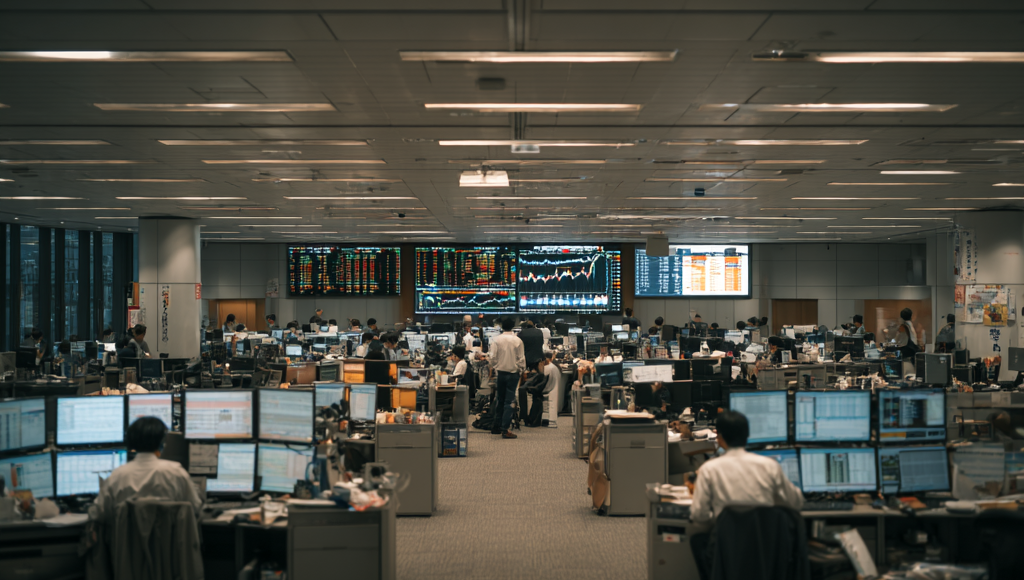
Asian stock markets traded mixed on Thursday, September 17, as investors absorbed the U.S. Federal Reserve’s first interest-rate increase in three years and assessed continuing risks from high oil prices and Middle East supply disruptions. Japan and Australia advanced, while Chinese and Hong Kong stocks fell, highlighting the uneven regional response to tighter U.S. monetary policy.
The U.S. Federal Reserve raised its benchmark rate by 25 basis points on Wednesday, moving the federal-funds target range to 3.75%–4.00%. The widely anticipated move was aimed at containing U.S. inflation, which remained at 3.4% in August, but the accompanying prospect of further tightening left investors cautious.finance.
The mixed performance across Asia reflected competing forces. Falling oil prices offered some relief after Brent crude surged above $100 a barrel in recent sessions. Yet uncertainty around Middle East shipping routes, Saudi Arabia’s pipeline repairs and the global inflation outlook continued to limit investor confidence.
Asian Markets: A Mixed Performance
Japan’s Nikkei 225 gained 0.33% to close at 64,136.25 points, supported by a weaker yen and relative strength in export-linked shares. The broader Topix index rose 0.80% to 4,094.19, pointing to broader participation in the Japanese market’s advance.
South Korea’s Kospi slipped marginally, falling 0.04% to 6,715.41 points. The near-flat outcome followed a volatile trading session in which the market initially gained before losing momentum. Investors continued to weigh the outlook for semiconductor exports against concerns that higher U.S. rates could tighten global financial conditions.
Hong Kong’s Hang Seng Index declined 0.44% to 24,604.29 points, while mainland China’s Shanghai Composite fell 0.41% to 3,875.60. The losses reflected ongoing concern about China’s growth outlook and the risk that higher global borrowing costs could curb demand for exports and investment.
| Asian market | September 17 close | Daily move |
|---|---|---|
| Japan Nikkei 225 | 64,136.25 | +0.33% |
| South Korea Kospi | 6,715.41 | -0.04% |
| Hong Kong Hang Seng | 24,604.29 | -0.44% |
| China Shanghai Composite | 3,875.60 | -0.41% |
| Australia S&P/ASX 200 | 8,732.40 | +0.40% |
| Taiwan Taiex | Not specified in final close data | About +1.0% intraday |
| India Sensex | Not specified in final close data | About +0.1% to +0.3% intraday |
Australia’s S&P/ASX 200 rose 0.4% to 8,732.40, helped by strength in defensive and resource-linked shares. Taiwan’s Taiex gained about 1%, while India’s Sensex edged higher by roughly 0.1% to 0.3% during the session.finance.
Fed Rate Hike Shapes Sentiment
The Fed’s move was the first rate increase since 2023 and was broadly expected by global markets. However, the decision reinforced the possibility that U.S. monetary policy will remain restrictive for longer than investors previously anticipated.
Higher U.S. interest rates tend to affect Asian markets in several ways. They can strengthen the U.S. dollar, increase global funding costs and encourage investors to shift capital toward U.S. assets. These effects can pressure emerging-market currencies and raise financing costs for governments and corporations across the region.
For export-heavy Asian economies, the impact is more nuanced. A weaker local currency can support overseas revenue when converted back into domestic money, but higher rates may also suppress demand in key foreign markets.
The yen remained in focus. Japan’s currency traded around ¥156.11 per dollar after falling as low as ¥156.35, its weakest level in nearly two years. A softer yen can support Japan’s export sector, helping explain some of the Nikkei’s resilience.
Oil Prices Remain a Key Risk
Oil prices were still a major concern, despite easing from the previous session’s highs. Brent crude fell about 2.2% to $103.48 a barrel, while U.S. West Texas Intermediate crude declined 1.7% to $100.65. Both benchmarks remained significantly above late-February levels, when Brent traded near $72.
Energy markets remain vulnerable because oil flows through the Strait of Hormuz are limited and Saudi Arabia’s East-West pipeline has been undergoing repairs after an attack. The pipeline is essential because it transports Saudi crude to the Red Sea port of Yanbu, offering a bypass around Hormuz.
Read also : Tax Management strategies for Digital Nomads
Reports that Saudi Arabia could offer additional cargoes through Oman helped ease immediate supply fears. Still, investors remain alert to any new disruption involving Middle East infrastructure, tanker traffic or shipping routes.
Wall Street and Regional Outlook
Asian trading followed a weaker close on Wall Street after the Fed decision. However, U.S. stock futures pointed higher on Thursday, while the 10-year Treasury yield declined to 4.94% from 5.01% late Wednesday. That retreat in yields provided some support for global risk assets.
Read also : Gold : Build Your Wealth and Freedom
The outlook for Asian equities will depend on whether oil prices continue to decline, how quickly Saudi export routes normalize and whether the Fed signals additional rate hikes. Investors will also monitor Chinese economic data, currency-market moves and semiconductor demand.
For now, the September 17 session illustrates the balancing act facing Asian markets: easing oil prices provide a modest relief, but tighter U.S. policy and unresolved geopolitical risks keep the region’s investment environment fragile.
Our community already has nearly 330,000 readers!
Subscribe to our Telegram channel
Follow us on Telegram, Facebook and Twitter
© Copyright 2026 – Eurasia Business News. Article no. 3170

