
By William Collins, consultant in stock markets – Eurasia Business News, September 17, 2026. Article no 3171
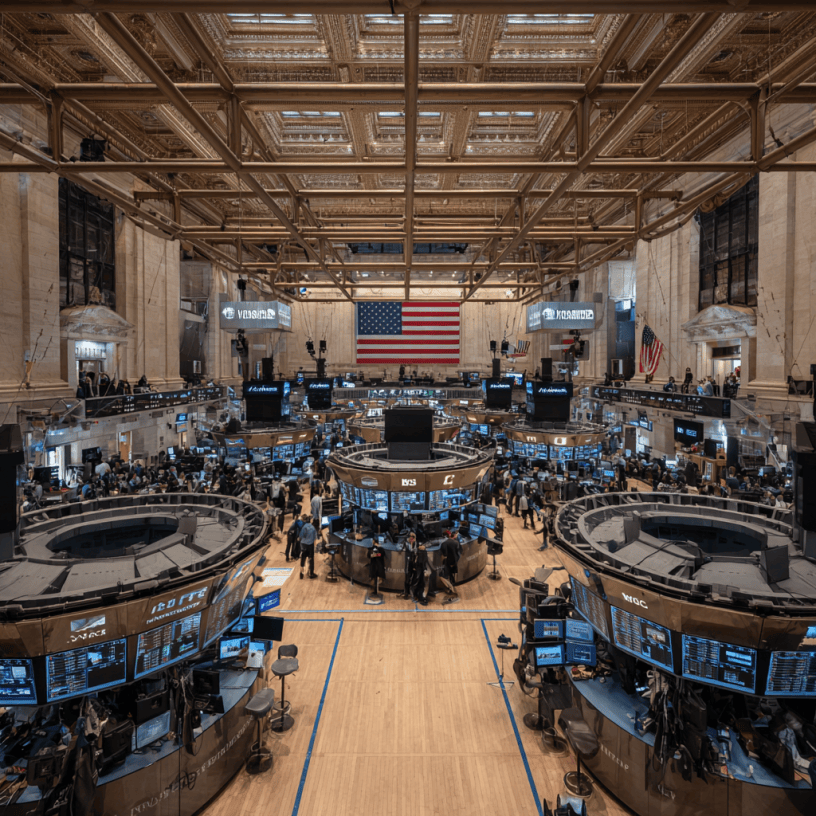
U.S. stocks rallied on Thursday, September 17, while Treasury yields declined as investors reversed much of the risk-off reaction that followed the Federal Reserve’s first interest-rate hike in three years. A retreat in oil prices helped calm inflation fears, lifting technology shares and pushing the benchmark 10-year Treasury yield back below 5%.
The rebound indicated that investors were increasingly comfortable with the Federal Reserve’s decision to raise rates by 25 basis points to a 3.75%–4.00% target range. While Chair Kevin Warsh struck a hawkish tone and policymakers signaled the possibility of at least one additional increase in 2026, markets interpreted the move as evidence that the central bank was addressing inflation risks rather than falling behind them.
Wall Street Rebounds After Fed Rate Hike
The three major U.S. stock indexes rose sharply after a volatile post-Fed session on Wednesday. The technology-heavy Nasdaq led the recovery as falling Treasury yields eased valuation pressure on growth stocks.
The Nasdaq Composite jumped 421.14 points, or 1.62%, to close at 26,399.68. The S&P 500 gained 85.12 points, or 1.13%, to 7,636.93. The Dow Jones Industrial Average rose 366.48 points, or 0.71%, finishing at 51,828.44.
| U.S. index | September 17 close | Daily performance |
|---|---|---|
| Dow Jones Industrial Average | 51,828.44 | +366.48 points, or +0.71% |
| S&P 500 | 7,636.93 | +85.12 points, or +1.13% |
| Nasdaq Composite | 26,399.68 | +421.14 points, or +1.62% |
| Nasdaq 100 | Not specified | +1.7% |
| PHLX Semiconductor Index | Not specified | +3.1% |
Technology stocks led the advance, reversing part of the previous session’s weakness. Semiconductor shares also recovered, with the PHLX Semiconductor Index gaining 3.1%. The rally was important because chipmakers had been hit earlier in the week by concern that calls for a more cautious approach to artificial-intelligence development could delay spending on AI infrastructure.
Investors also found support in solid U.S. labor-market data, which reinforced the view that the economy could withstand modestly tighter monetary policy.
Treasury Yield Falls Below 5%
The bond market delivered one of the day’s most important signals. The 10-year Treasury yield fell below 5%, slipping to roughly 4.95% after briefly moving above 5% in the previous session. The decline ended an eight-day run of rising yields and reduced pressure on stock valuations.
Yields move inversely to bond prices, meaning Thursday’s move reflected renewed buying interest in Treasuries. The retreat was driven by a combination of lower oil prices, a reassessment of the Fed’s policy outlook and investor confidence that the central bank’s rate hike could help prevent inflation from becoming embedded.
The 10-year Treasury yield has broad significance because it is a benchmark for mortgage rates, corporate borrowing costs, auto loans and other forms of long-term financing. Its return below 5% therefore gave markets reassurance that financial conditions may not tighten as sharply as investors feared earlier in the week.
The WSJ Dollar Index also declined after rising strongly on Wednesday. A weaker dollar can improve the earnings outlook for U.S. multinationals and support commodities priced in dollars, although the effect was offset by the oil market’s supply-driven decline.
Oil Prices Ease From Recent Highs
Oil prices continued to fall for a second consecutive day as concerns over Saudi Arabia’s damaged East-West pipeline began to ease. Brent crude futures dropped close to 3% to around $102.90 per barrel during the session, after trading above $109 earlier in the week. West Texas Intermediate crude fell roughly 1.8% to $100.62 a barrel.
By the end of the day, Brent settled at $103.48 per barrel, while WTI settled around $100.65. The decline followed reports that Saudi Arabia may be able to route additional crude exports through Oman and that the disruption caused by damage to the East-West pipeline could be less severe than initially feared.finance.
The pipeline is strategically important because it carries Saudi crude to the Red Sea port of Yanbu, allowing exports to bypass the Strait of Hormuz. When the system was damaged in drone attacks, markets feared that a substantial volume of Saudi oil exports could be curtailed. Evidence of alternative supply routes helped reduce the immediate geopolitical risk premium.
Nevertheless, oil remained well above levels seen before the latest Middle East escalation. Brent above $100 continues to pose an inflation risk for transportation, industrial companies and consumers, particularly in energy-importing economies.
Fed Credibility Supports Markets
The market’s improved mood also reflected an evolving interpretation of the Fed’s policy message. Investors initially reacted nervously to the quarter-point hike and signals of at least one more possible increase this year. But by Thursday, many appeared to view the action as a necessary response to inflation, especially after oil’s rapid rally.
Read also : Gold : Build Your Wealth and Freedom
A credible anti-inflation stance can support stocks over time if it lowers the risk that the Fed will need to impose more aggressive rate hikes later. With crude prices retreating and long-term yields declining, investors became more willing to buy equities—particularly technology and semiconductor shares that are highly sensitive to interest-rate moves.
Market Outlook
Thursday’s rally showed that markets remain highly responsive to changes in oil prices and Treasury yields. If Brent continues to retreat and the 10-year yield holds below 5%, equities could retain support after the post-Fed rebound.
However, risks remain elevated. The Middle East conflict could disrupt supply routes again, the Saudi pipeline’s restoration timetable remains important, and the Fed has left open the prospect of further tightening. For now, investors have moved beyond the initial shock of the rate hike, but the next direction for stocks will depend on whether inflation pressure continues to ease.
Our community already has nearly 330,000 readers!
Subscribe to our Telegram channel
Follow us on Telegram, Facebook and Twitter
© Copyright 2026 – Eurasia Business News. Article no. 3171

