
By William Collins, consultant in stock markets – Eurasia Business News, September 18, 2026. Article no 3172
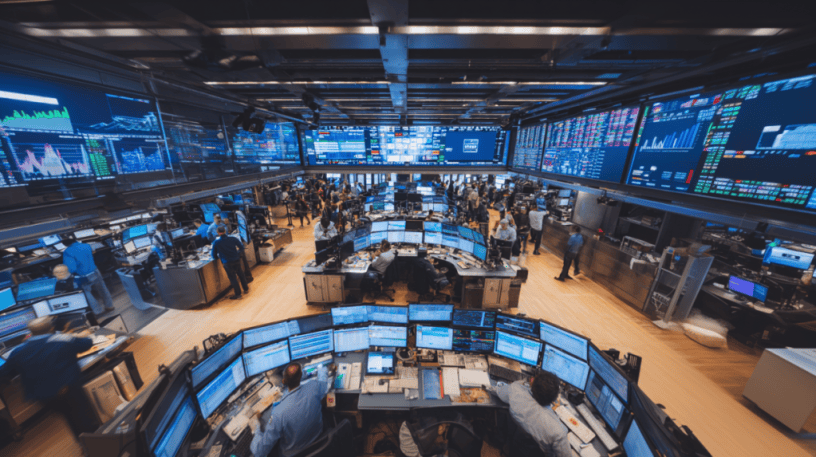
Wall Street closed a turbulent week with a subdued and mixed session on Friday, September 18, 2026, as investors weighed higher borrowing costs, Treasury yields near 5% and oil prices that remained above $100 a barrel. The Nasdaq Composite ended higher and recorded a weekly gain, while the Dow Jones Industrial Average posted its third consecutive weekly decline and the S&P 500 finished marginally lower for the week.
The week was defined by rapid shifts in investor sentiment. Markets confronted renewed concerns about the pace of artificial-intelligence development, an intraday move above 5% in the 10-year Treasury yield and the Federal Reserve’s first interest-rate hike since 2023. Technology shares staged a strong rebound on Thursday, but Friday’s trading lacked a decisive follow-through as investors recalibrated expectations for inflation and future Fed policy.
Major U.S. Index Performance
Friday’s session ended with a modestly positive tone for the S&P 500 and Nasdaq, while the Dow slipped. The moves were small, but the weekly results underscored the divergence between technology stocks and more economically sensitive blue chips.
| Index | September 18 close | Daily change | Weekly change |
|---|---|---|---|
| Dow Jones Industrial Average | 51,682.64 | -95.40 points, or -0.18% | -1.7% |
| S&P 500 | 7,650.50 | +12.74 points, or +0.17% | -0.1% |
| Nasdaq Composite | 26,522.55 | +104.25 points, or +0.40% | +0.7% |
| Russell 2000 | 2,860.25 | -0.5% | -1.5% |
The Dow’s 1.7% weekly drop was its largest percentage decline since March and its third straight weekly loss. The S&P 500 edged down 0.1% over the five trading days, marking its second consecutive weekly fall. The Nasdaq rose 0.7% for the week, benefiting from strength in selected software and cybersecurity stocks.
The 10-year Treasury yield again touched the important 5% threshold during Friday trading before ending just below it. Higher long-term yields increase borrowing costs for consumers and corporations while placing downward pressure on equity valuations, particularly for growth companies whose expected profits are further in the future.
Fed Hike and AI Concerns Shape Trading
The Federal Reserve raised its benchmark interest rate by 25 basis points on Wednesday, moving the target range to 3.75%–4.00%. It was the first U.S. rate hike since 2023, and Fed Chair Kevin Warsh indicated that policymakers could deliver one more increase before year-end if inflation remains persistent.
The decision initially unsettled stocks and bonds, particularly after officials adopted a hawkish tone. Investors worried that higher rates, combined with a rise in oil prices, could weigh on corporate earnings, consumer demand and technology valuations.
Artificial intelligence added another source of volatility. Several leading AI executives called for a slower pace of development for powerful models, citing safety and misuse risks. The remarks hit semiconductor shares earlier in the week, as investors reassessed expectations for demand for high-performance chips, memory and data-center capacity.
Read also : Gold : Build Your Wealth and Freedom
Technology recovered later in the week, helped by a Thursday decline in oil prices and Treasury yields. But Friday’s quiet trading suggested that investors are still weighing whether AI-related capital spending can maintain its previous momentum under higher interest rates.
Software and Crypto Stocks Outperform
Strategy Inc. was the Nasdaq’s biggest weekly gainer, rising 17.52%. The increase followed the Securities and Exchange Commission’s decision to grant temporary, conditional relief allowing certain platforms to facilitate trading in tokenized U.S. stocks. The development supported crypto-linked companies and revived investor interest in businesses connected to digital assets.
CrowdStrike gained about 14.95% for the week after reaching a record high on Monday. Cybersecurity stocks benefited from the AI slowdown debate because a more cautious pace of AI development eased concern that generative AI could rapidly disrupt established software businesses.
Palo Alto Networks rose 9.96%, while Fortinet also advanced. The gains indicate that investors continue to favor companies with recurring revenue, essential security services and exposure to enterprise technology spending.
Read also : The Private Investor Deal Evaluation Handbook
On the downside, Constellation Energy fell about 11% during the week. Comcast dropped roughly 10%, while CoreWeave declined around 9%. The losses showed that investors remained selective as higher yields and changing expectations for energy and AI investment reshaped market leadership.
Oil Prices Ease but Stay Above $100
Oil prices swung throughout Friday’s session, rising early before reversing lower. U.S. West Texas Intermediate crude settled at $100.30 a barrel, down $1.61, or 1.58%. Brent crude settled at $103.87 a barrel, down 95 cents, or 0.91%.
The pullback followed reports that China had urged Tehran to help restrain Houthi military activity and indications that Saudi Arabia could restore some East-West pipeline capacity while rerouting cargoes through Oman. These developments eased immediate fears that the pipeline disruption would remove large volumes of crude from the global market.
Read also : Tax Management strategies for Digital Nomads
Still, Brent remains substantially higher than before the latest Middle East escalation, keeping pressure on inflation expectations. The combination of oil above $100 and a 10-year Treasury yield near 5% remains a challenge for Wall Street.
Outlook for Investors
The September 18 close showed that markets have not resolved the week’s central questions. Investors must assess whether the Fed can curb inflation without damaging growth, whether oil supply disruptions will persist and whether AI companies can sustain their commercial expansion while adopting stronger safety restrictions.
The Nasdaq’s weekly gain suggests continued confidence in select technology names. But the Dow’s third straight decline and the S&P 500’s small weekly loss demonstrate that the broader market remains cautious. With yields elevated and oil markets volatile, investors are likely to remain highly sensitive to inflation data, Fed commentary and headlines from the Middle East.
Our community already has nearly 330,000 readers!
Subscribe to our Telegram channel
Follow us on Telegram, Facebook and Twitter
© Copyright 2026 – Eurasia Business News. Article no. 3173

